
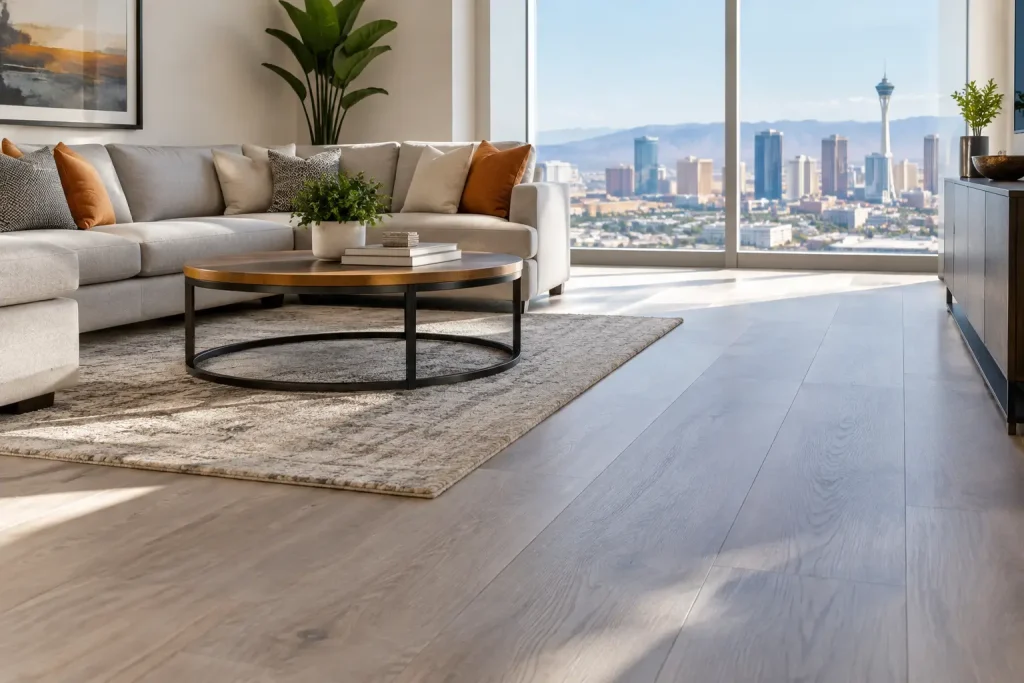
If you are choosing the best low maintenance flooring for a Las Vegas home, luxury vinyl plank and porcelain tile are usually the safest choices. Both stand up well to desert dust, pet traffic, everyday spills, and the constant in-and-out that comes with busy households and rental properties in Las Vegas, Henderson, Summerlin, and North Las Vegas. The better choice depends on the room, your budget, and whether you want a warmer look underfoot or the longest possible lifespan.
Flooring is not just a style decision here. Fine dust collects quickly, hard water can leave marks near entryways and bathrooms, and a small plumbing leak can cause expensive damage if the wrong material is installed. A floor that looks good on day one but needs special cleaners, frequent refinishing, or fast replacement after a spill is rarely a low-maintenance option.
What Makes Flooring Low Maintenance?
Low-maintenance flooring should be easy to clean, resistant to scratches and stains, and reasonably forgiving when water gets where it should not be. It should also hold up without constant polishing, sealing, waxing, or repair work.
For many local homeowners and landlords, the most practical flooring is one that can be swept or vacuumed regularly and mopped with a manufacturer-approved cleaner as needed. It should not trap dust, show every footprint, or require a careful routine just to stay presentable.
The installation matters as much as the product. Poorly prepared subfloors, loose transitions, weak grout, or gaps around a toilet and exterior door can turn even quality flooring into a recurring repair issue. Finish work around baseboards, doorways, cabinets, and thresholds makes the floor look complete and helps protect the edges over time.
Best Low Maintenance Flooring Options
Luxury Vinyl Plank: Best Overall for Most Homes
Luxury vinyl plank, often called LVP, is a top choice for occupied homes, rentals, and quick property updates. It gives you the look of wood without the regular refinishing, careful moisture control, or scratch concerns that come with many hardwood floors. Most quality LVP products are water-resistant, and many are marketed as waterproof when installed correctly.
It is comfortable underfoot, quieter than tile, and available in colors that work with modern Southwest interiors. Mid-tone oak looks and textured finishes are especially practical because they hide everyday dust better than glossy dark floors.
LVP is a strong fit for living rooms, bedrooms, hallways, kitchens, and laundry areas. It can also work in bathrooms, provided the floor is installed with careful attention to perimeter sealing and plumbing areas. While vinyl handles spills well, water can still reach the subfloor through damaged edges, failed seams, or a long-standing leak.
The trade-off is that heavy furniture, sharp objects, and direct sunlight can damage lower-grade products. In rooms with strong afternoon sun, use window coverings and choose a quality material rated for residential traffic. A professional installer can also help determine whether the existing floor needs removal or whether the new flooring can be installed over a suitable surface.
Porcelain Tile: Best for Water and Long-Term Wear
Porcelain tile is one of the toughest flooring choices available. It does not mind wet shoes, kitchen spills, pet bowls, or a busy bathroom. It also works well in homes with evaporative cooling, pool traffic, or frequent entryway messes.
For Las Vegas properties, porcelain is particularly useful in kitchens, bathrooms, laundry rooms, entryways, and downstairs living areas. It will not fade easily in bright rooms, and it can last for decades when installed over a properly prepared surface.
The maintenance is simple, but grout is the exception. Light-colored grout can show dirt and discoloration, especially in high-traffic areas. Choosing a medium or darker grout color and having grout sealed when appropriate can reduce cleanup time. Large-format porcelain with narrower grout lines is another practical option for homeowners who want less grout to maintain.
Tile is harder and cooler underfoot than vinyl, which some people appreciate during hot weather. Others prefer rugs in bedrooms and family rooms for comfort. Tile installation also takes more planning because the subfloor must be level and solid. Rushed prep work can lead to cracked grout, lippage between tiles, or loose pieces later.
Sheet Vinyl: Best for Budget-Friendly Water Resistance
Sheet vinyl is often overlooked, but it remains a practical option for bathrooms, laundry rooms, and rental units. With fewer seams than planks or tiles, it offers good protection against everyday moisture and is easy to wipe clean.
Modern sheet vinyl comes in better-looking patterns than many people remember, including stone and wood-look styles. It is soft underfoot, generally affordable compared with tile, and quick to maintain. For a landlord preparing a property between tenants, it can be a sensible choice where durability and cleanup matter more than a high-end finish.
Its main drawback is damage from tears, punctures, and heavy appliances. Repairs can be more noticeable than with individual planks or tiles. Careful installation and proper floor preparation are essential because imperfections below the material can eventually show through.
Laminate Flooring: Good for Dry Rooms, Not Every Room
Laminate flooring can be a low-maintenance choice for bedrooms, hallways, and living areas that stay dry. It resists normal scratching better than some wood floors and is easy to sweep. It can also provide an attractive wood-style look at a manageable price range.
However, laminate is not the best choice where water is common. A dishwasher leak, overflowing toilet, or wet mop left too long can swell the core and damage the edges. Some newer products have improved water resistance, but that is not the same as being worry-free around standing water.
Laminate makes sense when the household wants a clean look in dry spaces and does not have major moisture risks. For homes with active pets, young children, or frequent rental turnover, LVP is often the more forgiving choice.
Engineered Hardwood: Best for a Real-Wood Look With More Care
Engineered hardwood brings warmth and character that vinyl and tile cannot fully duplicate. It is more stable than solid hardwood in changing indoor conditions, and it can be a good option for a formal living room, dining room, or bedroom.
Still, it is not the lowest-maintenance flooring on this list. It can scratch, fade in intense sun, and show water spots or pet accidents. It also needs the right cleaner and may eventually require refinishing, depending on the wear layer.
Choose engineered wood because you truly want real wood, not because you want the easiest floor to own. A matte finish and a lighter, natural tone will usually hide minor wear better than a dark glossy finish.
Flooring Choices That Usually Create More Upkeep
Carpet can feel comfortable, but it holds dust, allergens, pet hair, and stains. In a desert climate where fine dust finds its way indoors, it often needs more frequent deep cleaning than homeowners expect. Carpet can still make sense in bedrooms, but it is rarely the best option for an entire home when easy maintenance is the goal.
Natural stone has a high-end look but typically needs more attention than porcelain. Many stone surfaces require periodic sealing and can stain or etch if the wrong cleaner is used. High-polish floors of any material also tend to show footprints, dust, and smudges faster than textured or matte finishes.
How to Choose for Each Room
A whole-house flooring plan does not have to use one material everywhere. Many homes benefit from porcelain tile in wet areas and LVP in bedrooms and main living spaces. This approach keeps maintenance simple while making each room more comfortable and practical.
For a rental property, consistency matters. Using the same durable LVP through most dry areas can make future repairs easier because spare material is available and replacement pieces blend in better. For a primary residence, comfort, noise level, and the look you want may matter more than having one continuous surface.
Before installation, consider the condition of the existing floor and subfloor. Older homes may have uneven areas, prior water damage, cracked tile, or layers of old flooring that affect the finished height at doors and cabinets. Addressing those details upfront prevents surprises and gives the new floor a cleaner, longer-lasting result.
When you pick your material, our floor installation and tile installation crews can install it, including luxury vinyl plank, laminate and porcelain tile.
Keep Any Floor Looking Better With Less Work
The simplest maintenance routine starts at the doors. Good entry mats catch a surprising amount of desert grit before it scratches or dulls the surface. Sweep or vacuum regularly using settings appropriate for hard flooring, and clean spills promptly rather than letting them sit.
Avoid soaking floors with water, especially laminate and engineered wood. Use cleaning products made for the floor type, and skip harsh chemicals that can leave residue, weaken finishes, or discolor grout. If you notice loose flooring, cracked grout, soft spots, or staining near a wall or appliance, it is worth addressing early before a small moisture problem spreads.
The best choice is the one that fits how you actually live. If you want help comparing materials, repairing a damaged subfloor, or getting clean finish work on a flooring update, My Las Vegas Handyman can provide a free estimate and help you choose a practical option for your space.
Need a hand with this? We can help.
My Las Vegas Handyman is a licensed Las Vegas handyman (City license G74-04824) rated 4.9 on Google. We handle floor installation, tile installation and small repairs across Las Vegas, Henderson, North Las Vegas and Boulder City.


